
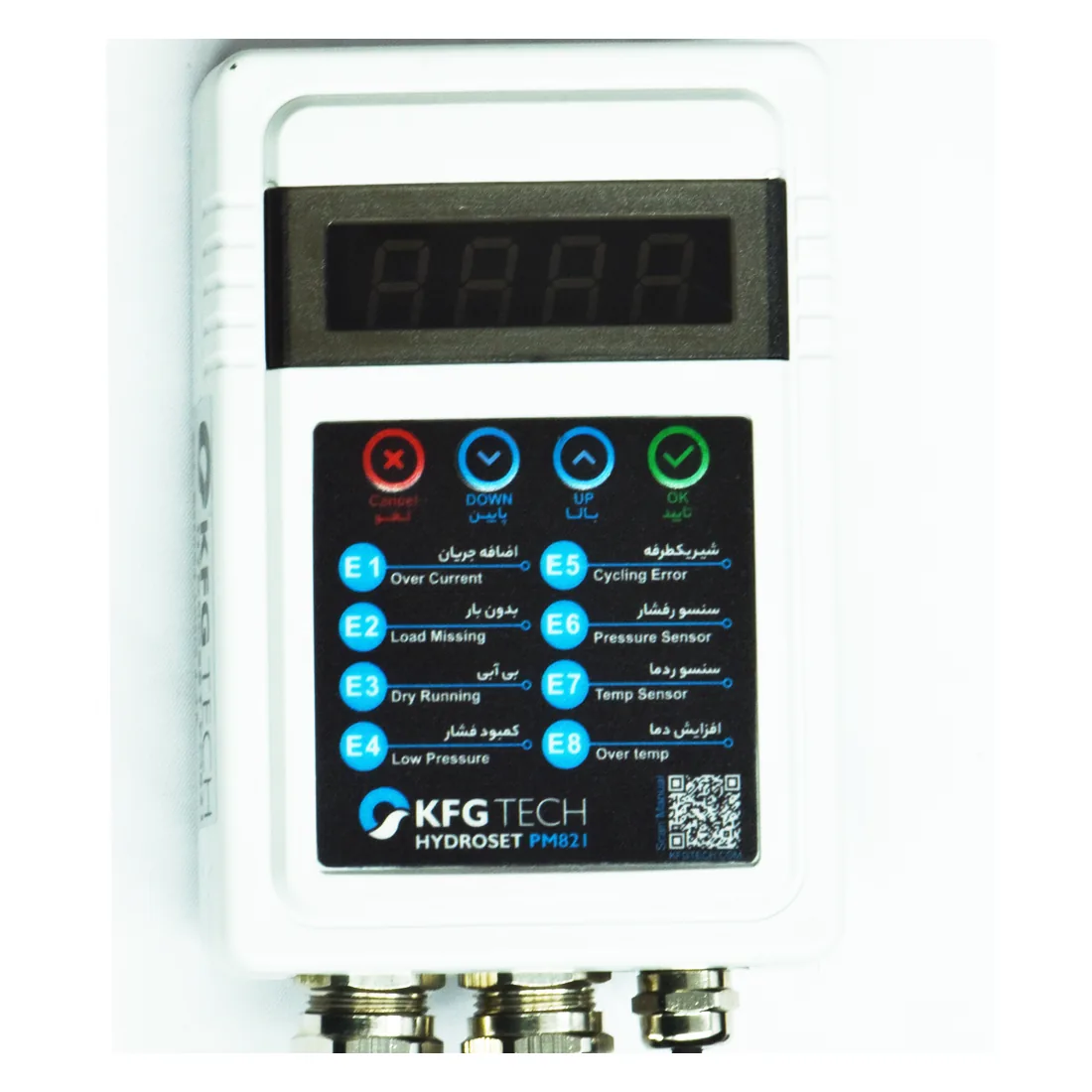
A gauge, a jug and a stopwatch tell you whether the pressure is really low and whether there is a leak. Three simple tests anyone can do.
"The pressure is low" is relative. For one person the shower is weak, for another the washing machine takes ages to fill. Before paying for new pipes or a new pump, it's worth knowing the real number. The three tests below need no special tools.
What unit is pressure measured in
In Iran the usual unit is the bar. One bar is about 14.5 psi and lifts water about 10 metres. Since each floor is about 3 metres high, each floor takes roughly 0.3 bar off the pressure.
What pressure is normal
International sources give 3 to 5.5 bar as normal pressure at the taps of a home. Below about 2.7 bar the flow feels weak, and above 5.5 bar it gradually damages taps, hoses and the water heater.
In buildings supplied by a pump and a pump controller, the pump room pressure moves between the controller's two set points. With HYDROSET's factory settings that range is 1.5 to 3 bar, and each floor has about 0.3 bar less. You can watch this floor by floor in the pump controller simulator.
Test 1: read the pressure
- Pump room pressure: the simplest way is the number on the controller display or the gauge on the pressure tank.
- Pressure in the flat: buy a screw-on water pressure gauge with a half-inch thread and fit it to the washing machine tap or the garden tap. Open the tap and read the number.
- Read it once with no water in use and once with a shower running. If the pressure drops a lot when the shower opens, the pipes or the pump can't keep up with demand.
Write the number down, so the next time the pressure feels "odd" you have something to compare with.
Test 2: flow in 6 seconds
Pressure doesn't tell the whole story; what matters is how much water comes out. A measuring jug and your phone's stopwatch are enough:
- Hold the jug under the shower or tap.
- Open the tap fully and collect water for exactly 6 seconds.
- Multiply the volume in litres by 10. The result is the flow in litres per minute. For example, 0.8 litres means 8 litres per minute.
| Flow | Means |
|---|---|
| under 10 litres per minute | weak |
| 10 to 15 litres per minute | acceptable |
| over 15 litres per minute | good |
Do the test on the shower and the kitchen tap separately. If only one is weak, the problem is in that aerator or showerhead, not in the pump.
Test 3: leaks
Do this test at night or whenever nobody is using water:
- Close every tap; the washing machine, dishwasher and toilet cistern must not be filling either.
- Write down the pressure. If the building has a pump, wait for the pump to stop and note the number on the controller display.
- Don't touch any tap for an hour, then read it again.
If the pressure dropped by more than about 0.2 bar in that hour, there is a leak somewhere. In a building with a pump controller there's an easier sign: if the pump starts by itself with no water in use, either the pipework leaks or the check valve is letting water back. The meter helps too; if everything is closed and the meter is turning, the leak is after the meter.
After the tests
| Result | Next step |
|---|---|
| Both pressure and flow are low | Go through the 10 common causes of low pressure in order |
| Pressure is fine but one tap's flow is low | That tap's aerator or showerhead |
| Pressure drops with no use | A leak or the check valve; see Why does the pump keep switching on and off? |
| Pump room pressure above 5.5 bar | The controller setting or a pressure-reducing valve |