
Low pressure isn't always the pump's fault. Ten common causes, from a half-open valve and a scaled showerhead to old pipes and a weak pump, and how to spot each.
When the shower runs weak, or the kitchen tap drops as soon as the washing machine starts, the first thought is usually that the pump has failed. In many buildings the problem is somewhere else, and some causes you can find yourself in a few minutes.
First, one question: is the pressure low at one tap or across the whole flat? If only one tap or one showerhead is weak, the problem is almost always in that fitting. If the whole flat or the whole building is short of pressure, look at the pipework, the pump room and the mains supply.
Check these yourself first
1. The main valve isn't fully open. After a pipe repair or a meter change, the stop valve for the flat or the valve next to the meter is sometimes left half open. Open them all the way.
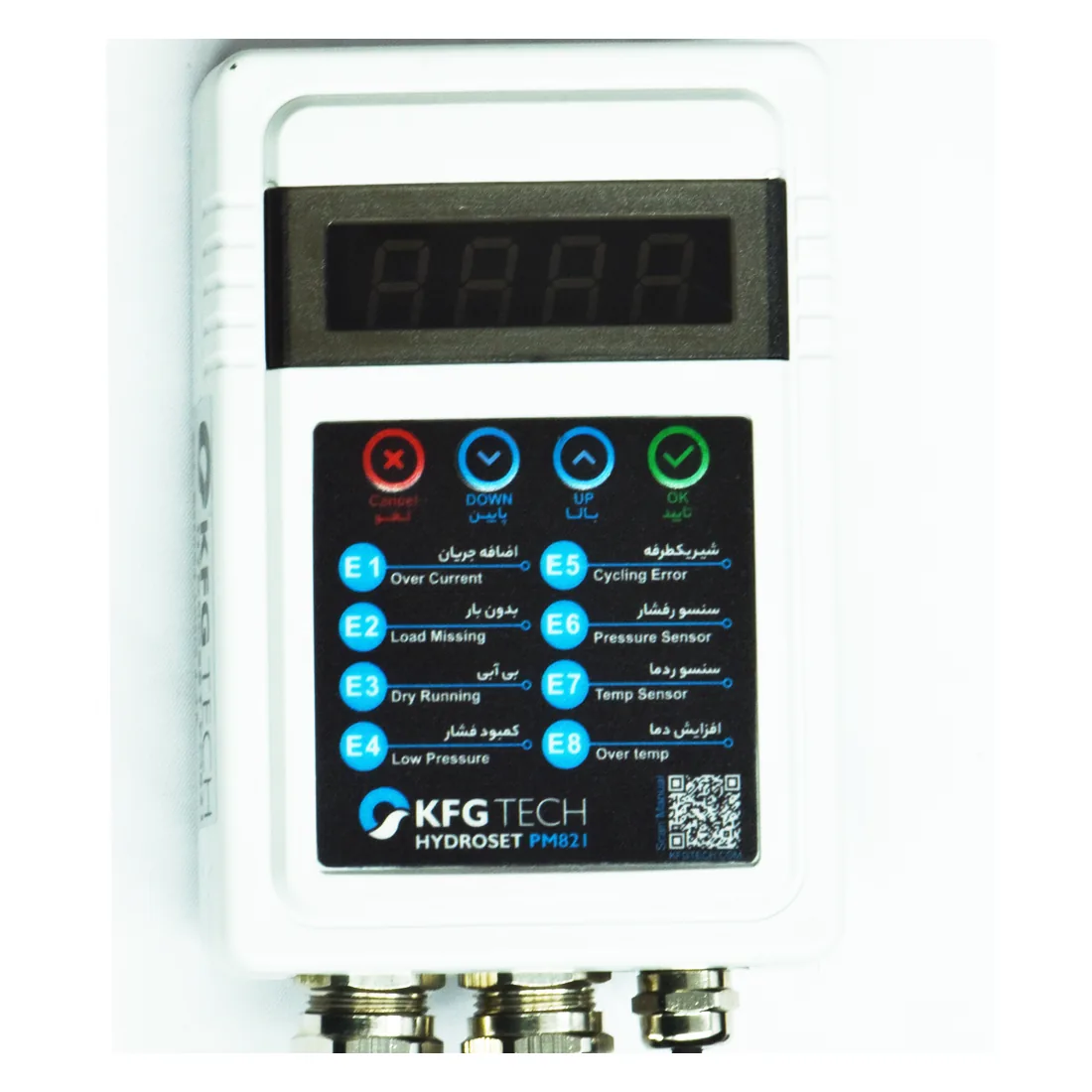
2. Mains pressure is low. Network pressure drops at peak hours and on hot days, and some cities ration water. If the building has no pump and the neighbours have the same problem, the cause is outside the building. If the building has a pump and a storage tank, a mains shortage first shows up as an empty tank, and the controller reports a dry-running error to protect the pump. See error E3.
3. Several draws at once. A shower, the washing machine and the dishwasher together, or several flats at once in the morning. If the pump or the pipes are too small for that demand, pressure drops. If the problem only happens at those times, this is the cause.
4. Upper floors. Each floor takes about 0.3 bar off the water pressure, so the fourth floor has about 1 bar less than the pump room. You can see this in the pump controller simulator, which has a pressure gauge on every floor.
These are fixed by cleaning
5. Scaled showerhead or tap aerator. Where the water is hard, white scale builds up on the showerhead holes and the tap aerator screen. Unscrew it and leave it in vinegar for a few hours, or replace it. If the pressure comes back, that was the problem.
6. A clogged strainer. The strainer at the inlet of the flat, the water heater or the combi boiler slowly fills up too. If only the hot water is weak, check the water heater or boiler inlet strainer first.
These are a plumber's job
7. Scale inside the pipes. Hard water leaves the same scale you see on the showerhead inside the pipes, narrowing them.
8. Old galvanised pipes. Galvanised steel pipe rusts from the inside and narrows after about 20 years. If the building is old and the water is sometimes yellow or brown, this is very likely the cause.
9. A leak. Water escaping somewhere never reaches the taps. A leak under the floor or inside a wall isn't always visible; how to find one is in How to measure water pressure in a building.
And the pump room
10. A weak pump or a low controller setting. If the pump's stop pressure (F1) is set low, the whole building is short of pressure. HYDROSET's factory F1 is 3 bar. If the pump is too weak for the building height, it never reaches that pressure. The manual's rule is simple: the head on the pump nameplate must be more than the building height plus 20 metres.
Where to start
| Symptom | Check this first |
|---|---|
| Only one tap is weak | That tap's aerator or showerhead |
| Only hot water is weak | Water heater or boiler strainer |
| Only at peak times | Simultaneous use, pump capacity |
| Only upper floors | F1 setting and pump capacity |
| Whole building, all the time | Main valve, mains supply, leaks, pipes |
If the building has a pump and the pressure keeps rising and falling, read Why does the pump keep switching on and off?