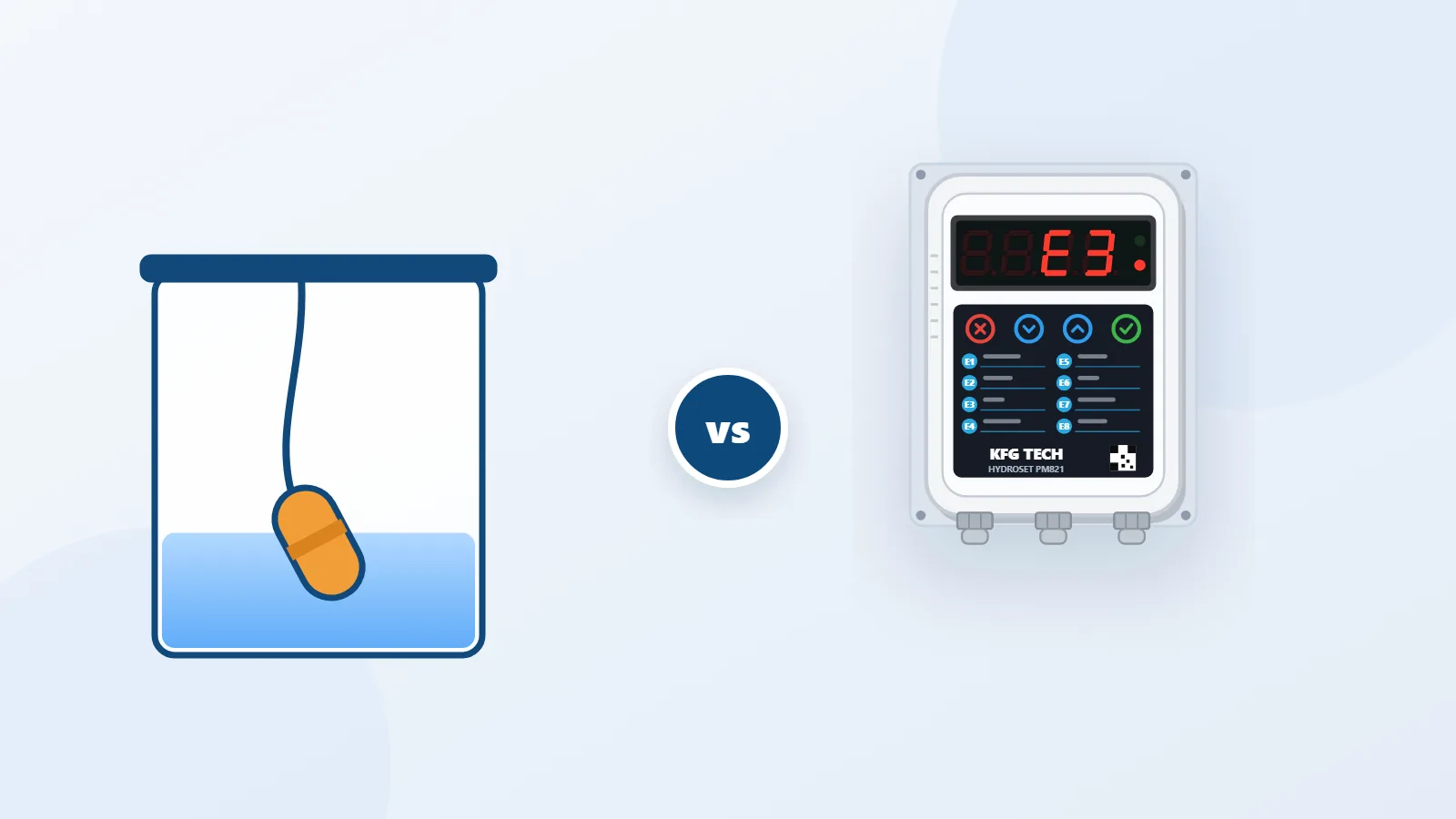
A float switch watches the water level in the tank; the pump controller watches the pump itself. What each one sees, what it misses, and when you need both.
A float switch and dry-run protection are both meant to save the pump from running without water, but they measure two different things. KFGTECH does not make float switches; this article only explains where each one is useful.
What a float switch does
A float switch is a floating switch that hangs inside the tank. When the water level drops and the float falls, its contact opens or closes the circuit. The length of the float switch cable, for example the 3 or 5 metre models on the market, only determines how deep into the tank it can monitor.
A float switch has two common uses:
- Protecting the pump: when the tank the pump draws from runs out of water, it cuts the pump's power.
- Filling the tank: when the tank is empty, it switches the filling pump on, and switches it off when the tank is full.
What the controller's dry-run protection does
The HYDROSET pump controller does not look at the water level; it watches the pump itself. When water does not reach the pump, it notices in two ways:
- From the current: a pump without water turns more lightly and draws less current. If the current falls below F4, it gives fault E3.
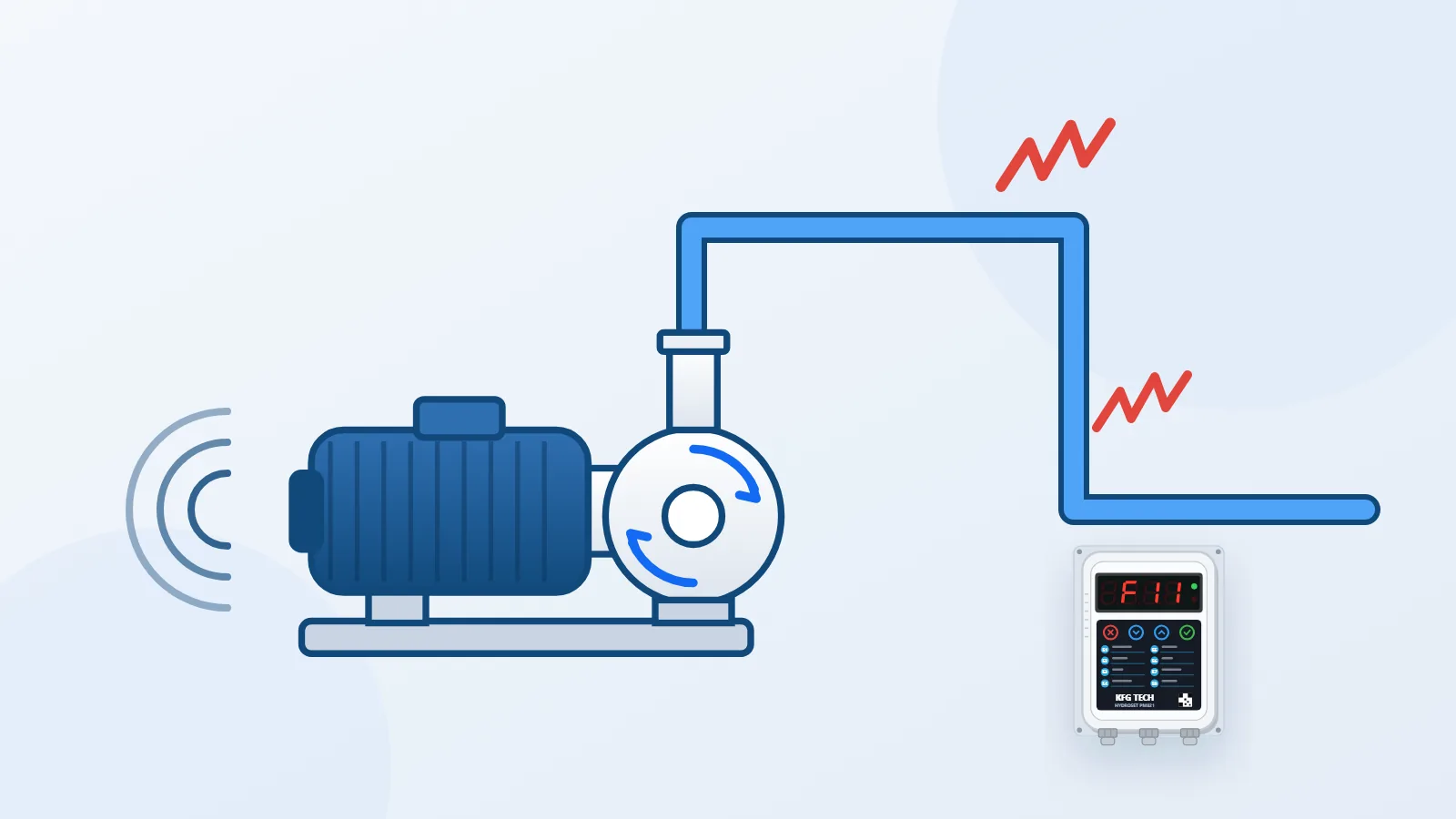
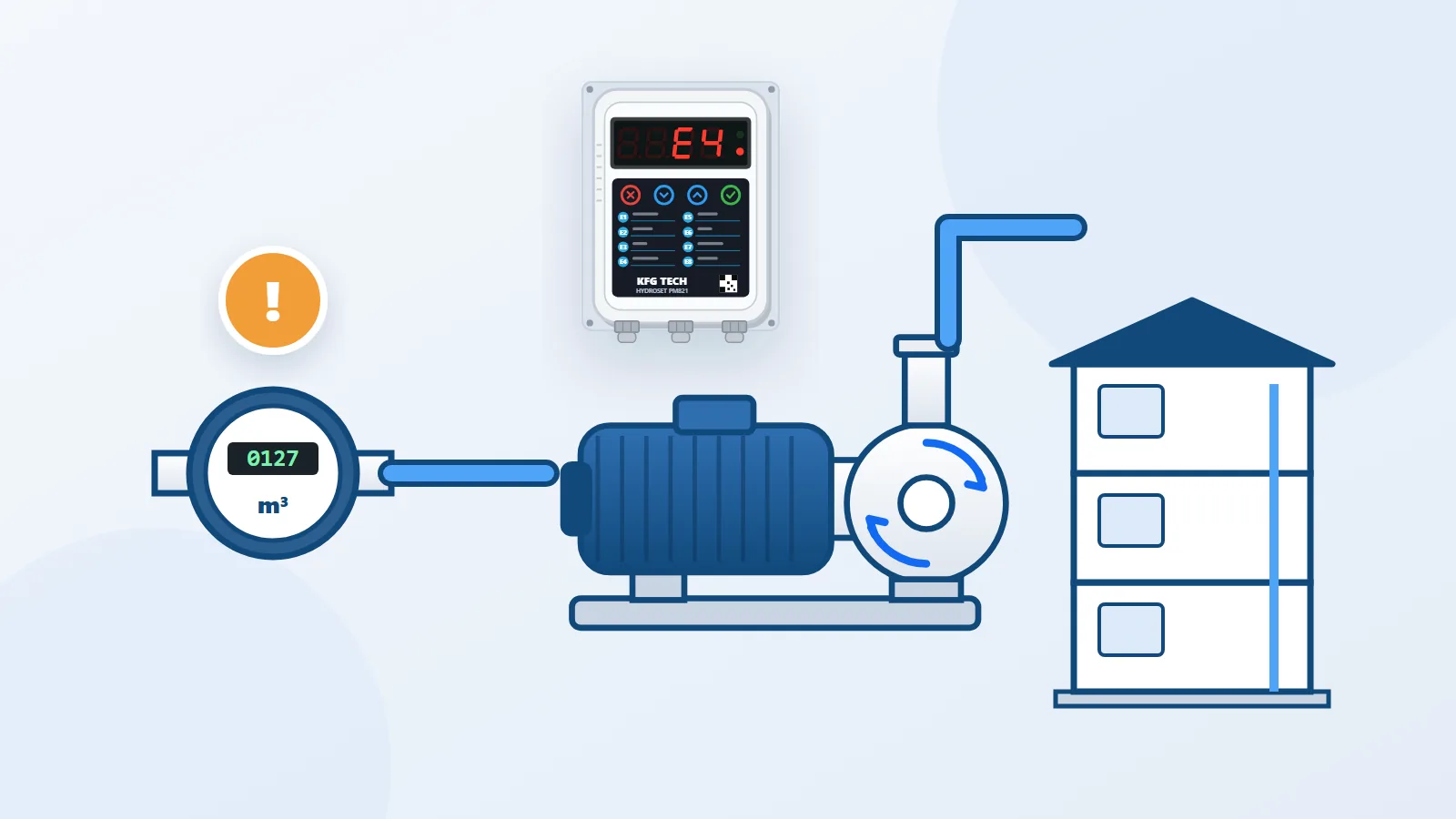
- From the pressure: if the pump runs but the pressure does not rise above F10, it gives fault E4.
In both cases the pump is switched off and the unit tries again every F6 minutes.
Comparison
| Point | Float switch | Controller dry-run protection |
|---|---|---|
| What it watches | Tank water level | The pump's own current and pressure |
| Empty tank | Detects it | Detects it |
| Air-locked pump with a full tank | Doesn't see it | Detects it |
| Closed inlet valve or blocked strainer | Doesn't see it | Detects it |
| Pump directly on the mains pipe | Not applicable | Detects it |
| Restart after the water returns | When the float rises | By retrying every F6 minutes |
| Shows the cause | No | Fault code on the display |
| Automatic tank filling | Its main use | Not its job |
When you need which
- Only protecting the building's water pump: the pump controller covers all the no-water situations above, including the ones a float switch cannot see; you don't need a separate float switch for this.
- Automatic tank filling: this is the float switch's job. The pump controller is for building pressure, not tank level.
- Both together: some people keep a float switch as a second layer so the pump doesn't run dry even during the detection time itself (F5, factory setting 20 seconds). The HYDROSET manual has no diagram for connecting a float switch; if you want both, leave the wiring to an electrician.
Dry-run protection works properly when it is set properly
F4 should be a little above the pump's no-water current and below its normal working current, and F10 below the normal working pressure. How to measure them is in installing a pump controller, and the causes of water shortage are in pump dry running.
If the controller's output drives a contactor, the pump current does not pass through the unit and current-based detection does not work. In that case set F4 to zero and detect water shortage by pressure (F10).