A pump controller switches the pump on and off by pressure; an inverter changes the motor speed. The differences in pressure behaviour, installation, protection and cost, and which suits your building.
A smart pump controller and an inverter are both used to control a building's water pump, but they work in completely different ways. Choosing between them depends on the size of the building, its consumption and the budget.
What a pump controller does
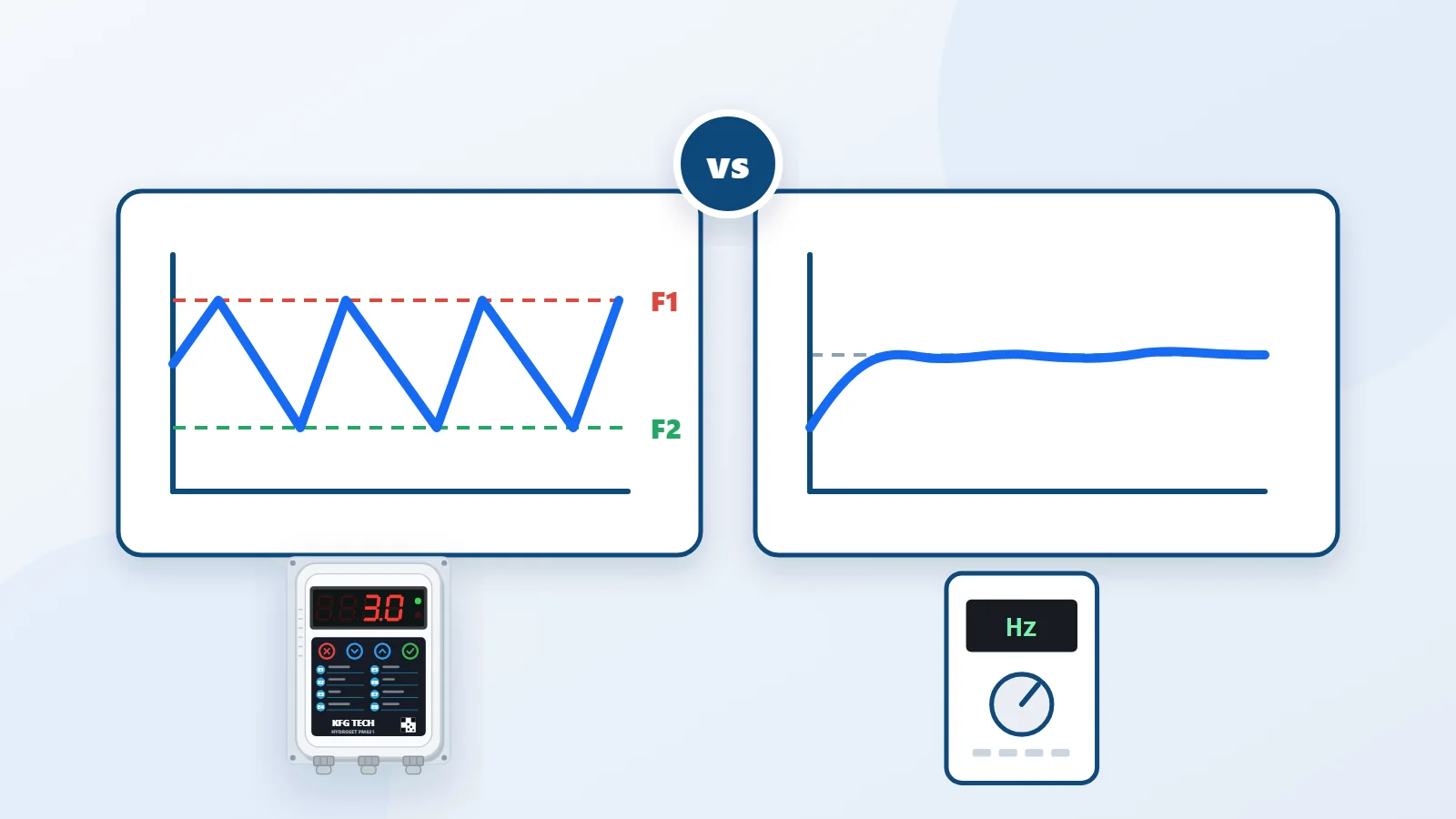
A pump controller switches the pump on and off based on pressure. When the line pressure falls below F2 the pump starts, and when it reaches F1 the pump stops. In between, the pump runs at its own full speed.
On top of that, the HYDROSET PM821 pump controller:
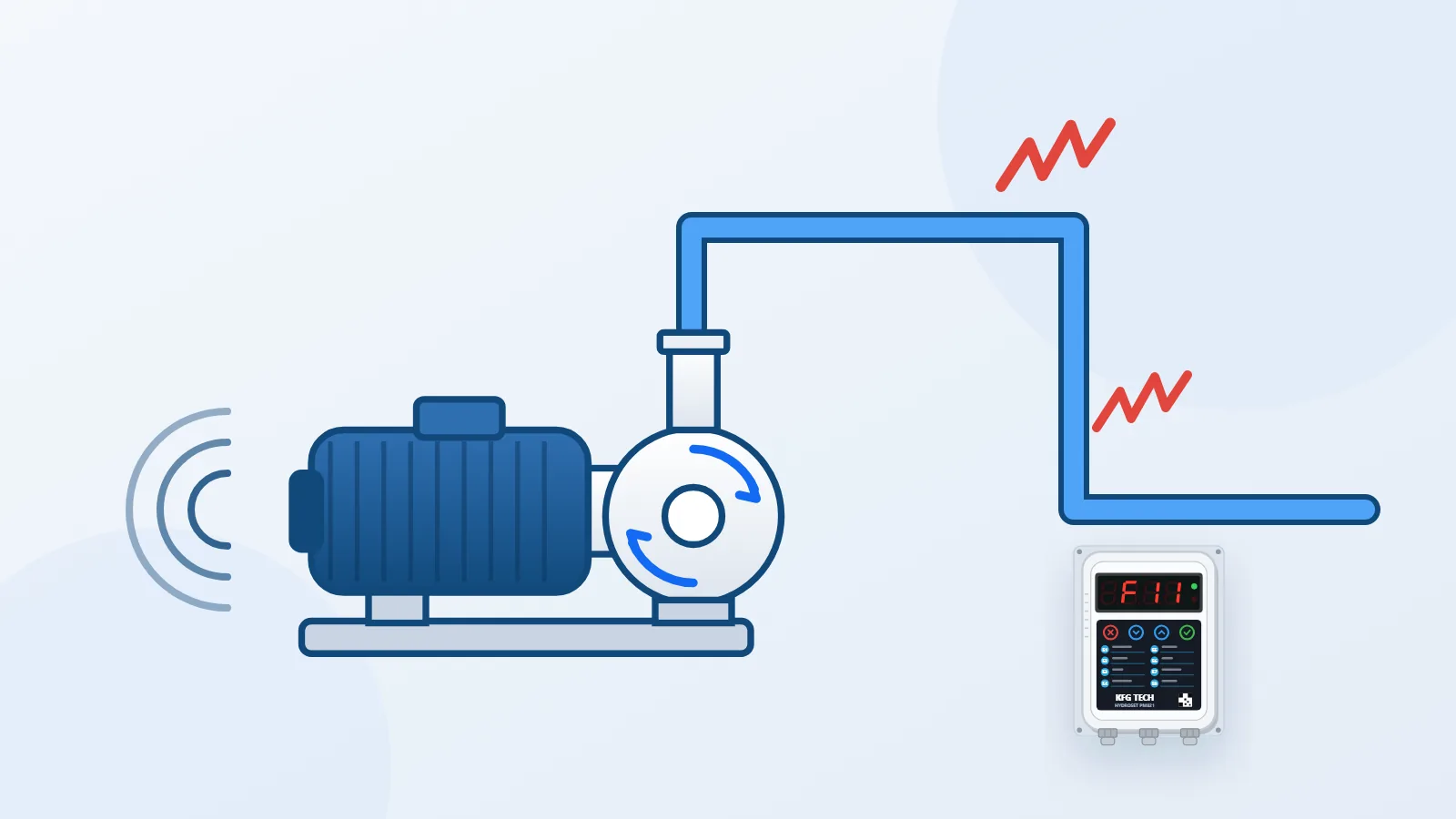
- Starts and stops the pump softly (F11 and F12).
- Detects dry running from a drop in current or pressure and stops the pump.
- Stops the pump on over-current.
- Shows a fault code and retries by itself after a water shortage.
What an inverter does
An inverter, or variable-speed drive, changes the speed of the pump motor. When demand is low the pump turns more slowly, and when it is high, faster. The aim is to keep the pressure roughly constant instead of letting it rise and fall between two numbers.
The differences
| Aspect | Pump controller | Inverter |
|---|---|---|
| Control method | On and off by pressure | Changing the motor speed |
| Pressure behaviour | Rises and falls between F2 and F1 | Roughly constant |
| Starting | Soft, over the F11 time | Gradual as the speed rises |
| Pressure vessel | Optional; reduces the number of starts | Follows a different pre-charge rule |
| Installation | In place of the pressure switch; pipework unchanged | More complex |
| Cost | Lower | Higher |
The pressure vessel pre-charge does not follow the same rule in these two systems. The "70% of set pressure" rule belongs to variable-speed boosters. For a pump that a controller switches on and off, the vessel pre-charge is about 0.2 bar below F2. See pressure vessel pre-charge.
Which one is right for you
A pump controller suits a building with one pump where the main problem is pressure fluctuation, the pump switching on and off, or the risk of the pump burning out when the water runs out. For homes, shops, gardens and residential buildings of up to ten floors, a pump controller on the existing pump is usually the most economical option.
An inverter is worth the higher cost when a fully constant pressure matters, the building's demand varies a lot through the day, or it is part of a large booster pump set.
If the building's only problem is low pressure on the upper floors, match F1 and F2 to the building height before buying anything. Low water pressure on the upper floors explains how.
In short
A pump controller switches the pump on and off intelligently and protects it. An inverter speeds the pump up and slows it down to keep the pressure constant. For most residential buildings in Iran with a single pump, a pump controller does the job needed at lower cost and with simpler installation. See also What is a pump controller and What is a booster pump.