Each floor takes about 0.3 bar off the water pressure. Why upper floors get low pressure, why it fluctuates there, and the fixes: F1 and F2, pump capacity, pipework and boosters.
In most buildings with a pump, the top-floor flats are the first to complain about water pressure. That's no accident: the higher you go, the lower the pressure. The good news is that in most cases the problem is solved by setting the pump controller correctly, with no need for a new pump.
Why upper floors have lower pressure
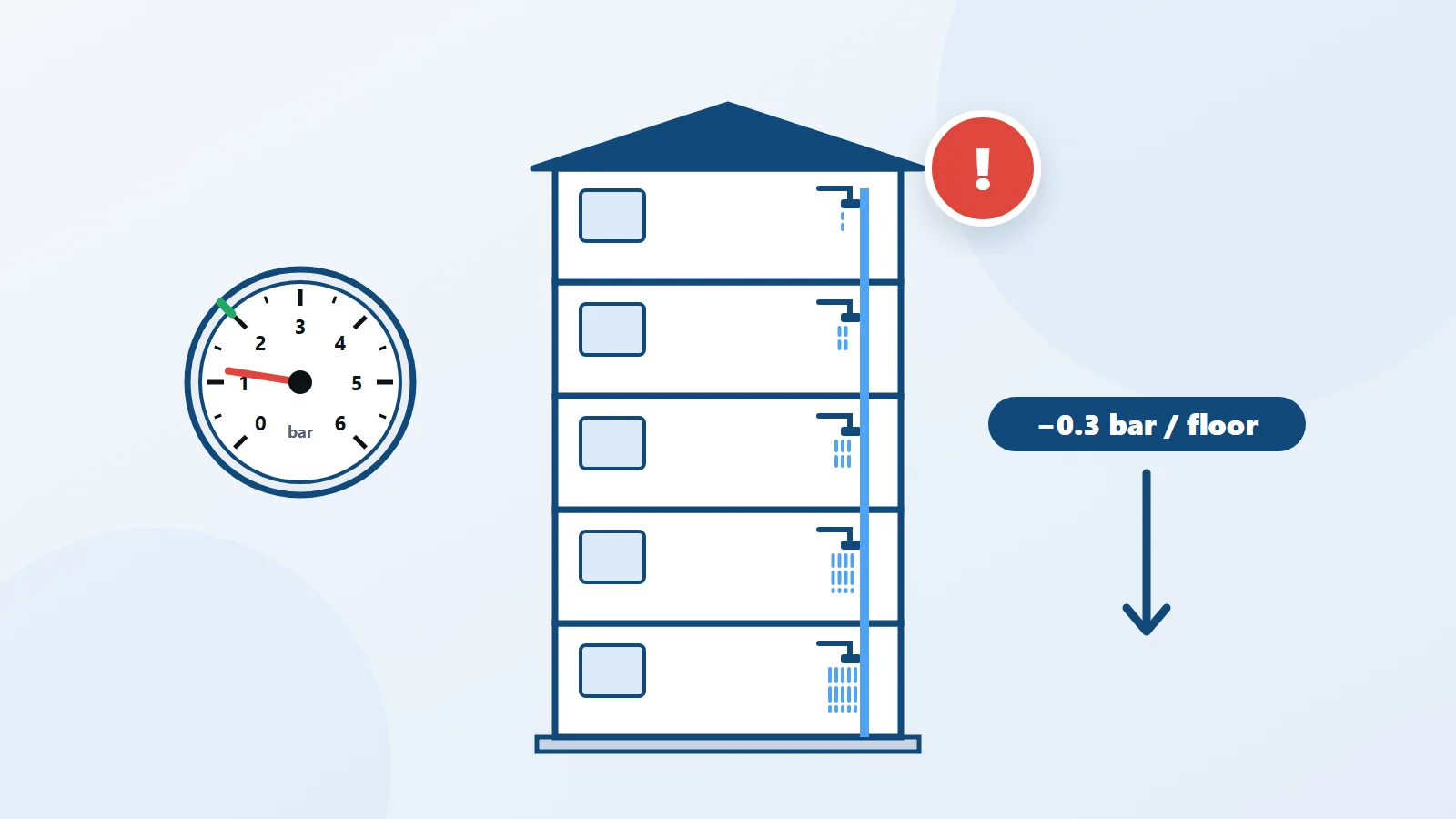
1 bar of pressure lifts water about 10 metres, and each floor is about 3 metres high. So each floor takes roughly 0.3 bar off the pressure. The fourth floor has about one bar less than the pump room.
See this in the pump controller simulator: there is a pressure gauge on every floor.
Why pressure on the top floor fluctuates
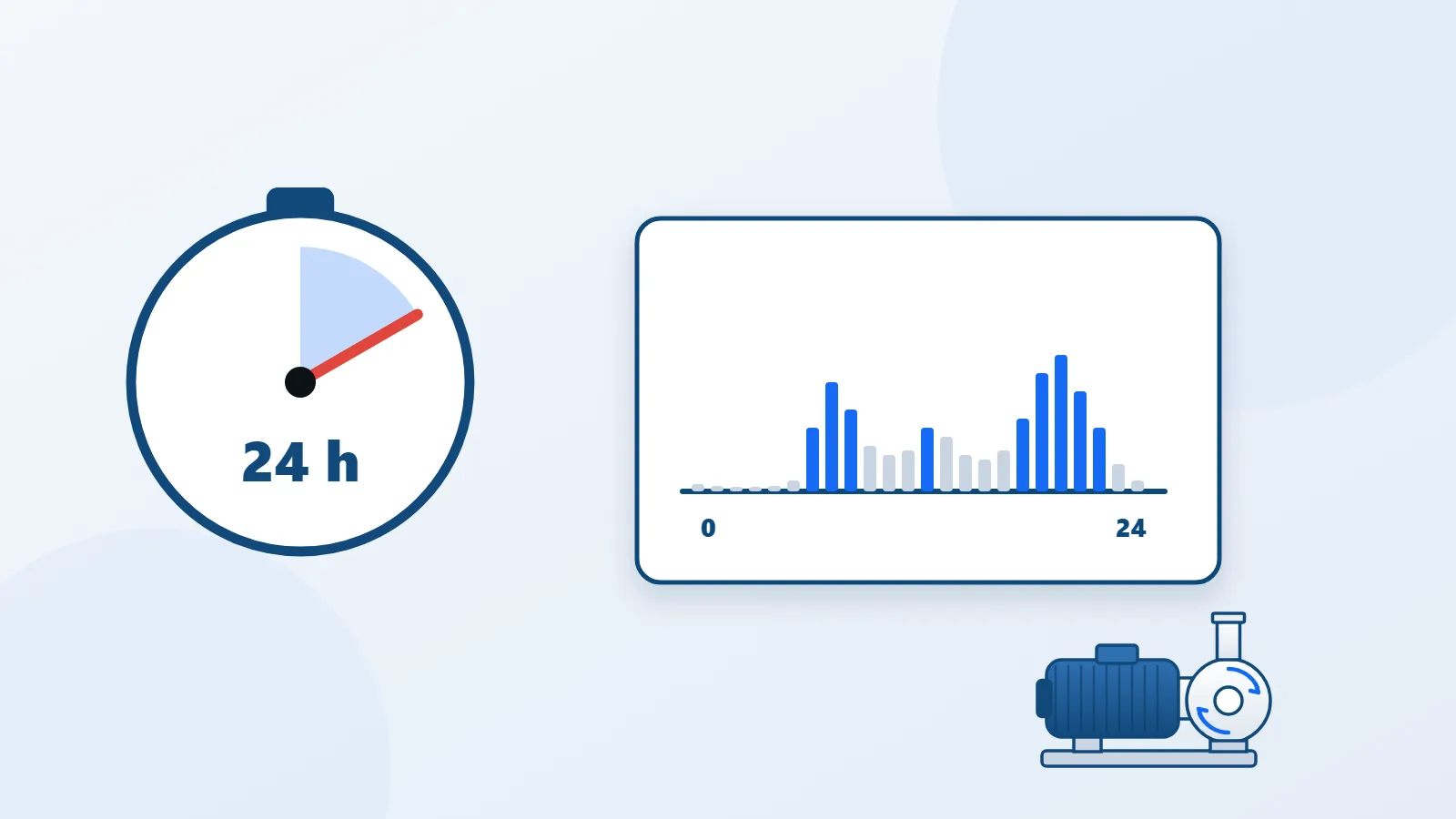
The pump controller keeps the pump room pressure between two numbers: the pump starts at F2 and stops at F1. So the pump room pressure is always rising and falling between the two. On the lower floors this swing is less noticeable, but on the top floor, where the pressure is lower to begin with, the shower clearly weakens as the pump room pressure nears F2.
With HYDROSET's factory settings, the pump room pressure moves between 1.5 and 3 bar. That range is designed for a building of about three floors. In a taller building, the upper floors get little pressure at the bottom end of that range.
Cause 1: F1 and F2 are too low for the building height
This is the commonest cause. Work out the pressure needed from the height between the pump and the highest tap:
- F1 = (building height ÷ 10) + 2
- F2 = F1 − 1.5
| Building height | F1 | F2 |
|---|---|---|
| 15 m (5 floors) | 3.5 bar | 2.0 bar |
| 20 m (7 floors) | 4.0 bar | 2.5 bar |
| 30 m (10 floors) | 5.0 bar | 3.5 bar |
Don't make the gap between F1 and F2 less than 1 bar. A small gap reduces the swing, but the pump keeps switching on and off. The manual considers a gap of 1 to 1.5 bar suitable.
How to change these two numbers is in How to set a water pump controller.
Cause 2: the pump is too weak for the building height
If F1 is right but the pump doesn't reach it, the pump is too weak. The manual's rule: the head on the pump nameplate must be more than the building height plus 20 metres. A pump that doesn't reach F1 runs nonstop.
Cause 3: simultaneous use
In the mornings, when several flats shower at once, if the pump's flow or the pipe diameter is too small for that demand, the upper floors lose the most pressure. If the problem only happens at those times, this is the cause.
Cause 4: the pipework
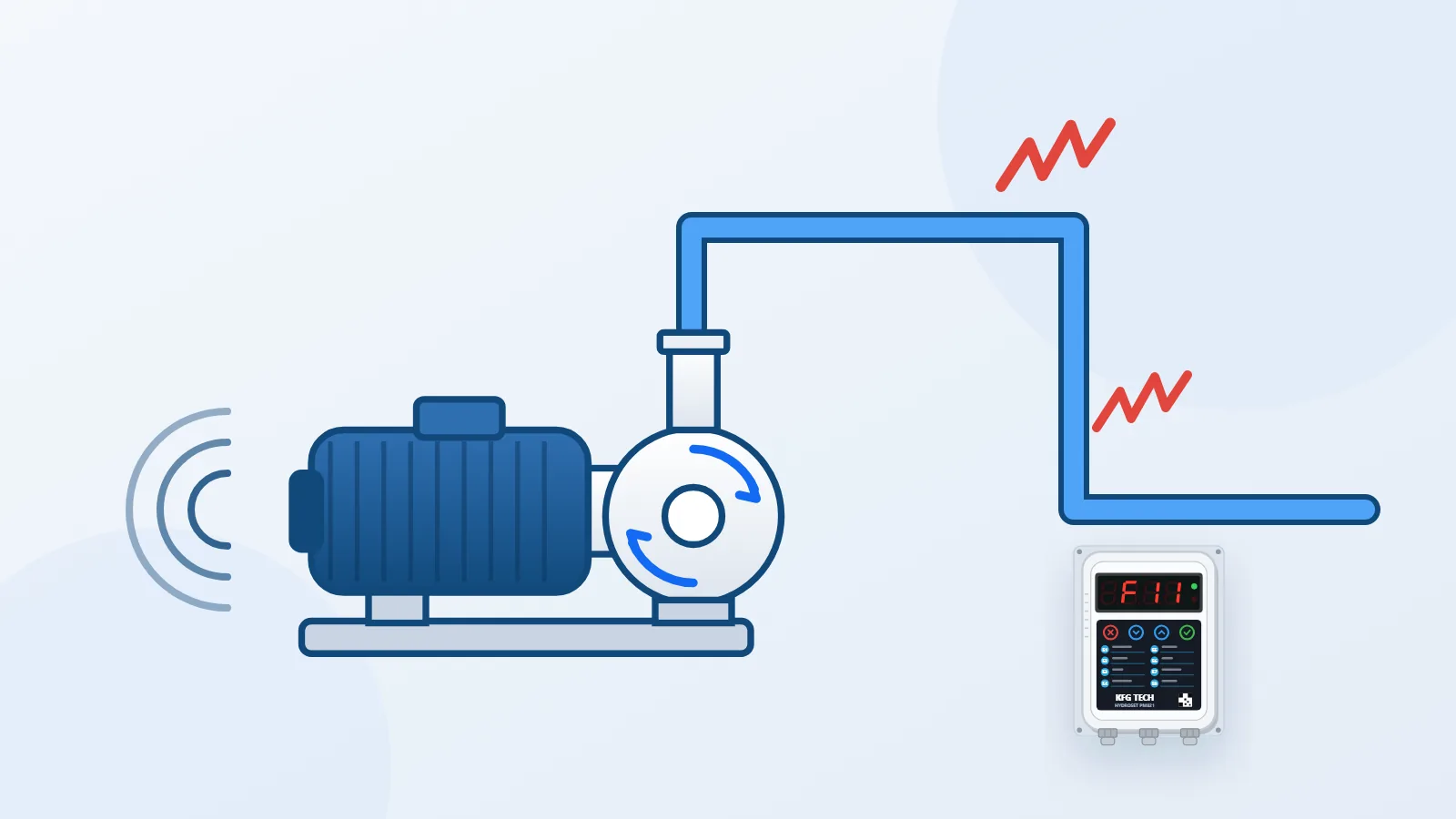
Scale inside the pipes reduces their effective diameter. Old galvanised pipe also rusts from the inside after years and narrows. The riser to the upper floors, which the water reaches by a longer route, shows the effect of that narrowing sooner.
Fixes
| Symptom | Fix |
|---|---|
| Always low, at all hours | Set F1 and F2 with the formula above |
| The pump doesn't reach F1 | A pump with more head |
| Only at peak hours | A larger pressure vessel or a higher-flow pump |
| Pressure rises and falls | Check the gap between F1 and F2 and the vessel pre-charge |
| Only one flat | That flat's aerators, strainer and pipes |
When you need a booster pump
In tall buildings with heavy simultaneous use, or where one pump alone can't deliver the flow needed, you need a booster pump set with several pumps. For most buildings of up to ten floors with one pump, setting the pump controller correctly on that same pump is enough. See What is a booster pump? and Pump controllers for apartment buildings.
If the pressure problem isn't limited to the upper floors, read 10 common causes of low water pressure in a building.