Single-cable, dual-cable, 180-degree and 90-degree are not model names; they describe the connection layout and the mounting angle. What each one means, and which actually affects how the unit works.
In pump controller listings you often come across the phrases "single-cable", "dual-cable", "180-degree" and "90-degree". These are not trade names of models; they describe the connection layout and the mounting angle. This guide explains what each one means and which of them actually affects how the unit works.
What single-cable and dual-cable mean
These two phrases refer to how the unit is wired:
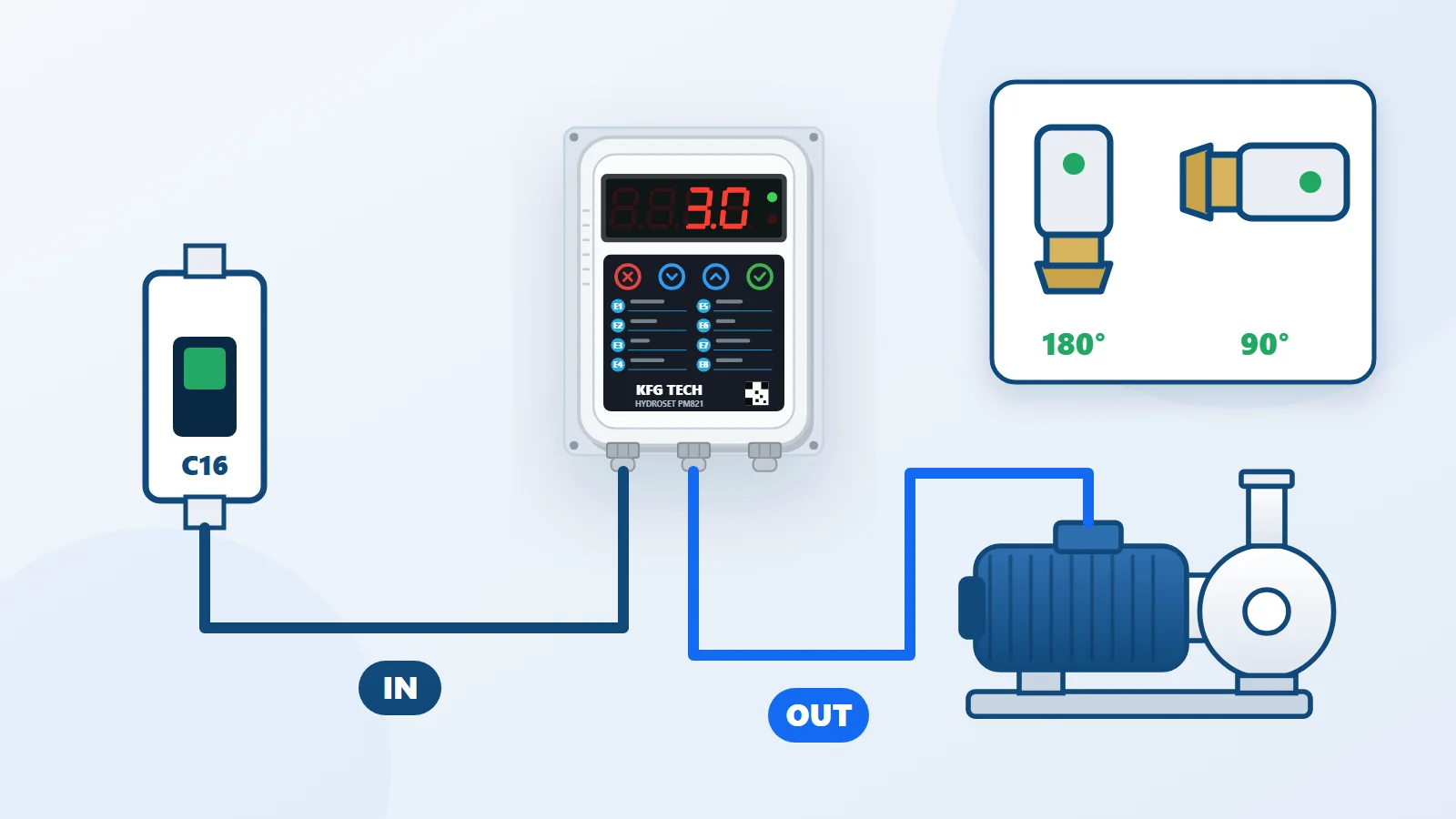
- Dual-cable means the unit has two separate paths: one cable comes from the mains to the unit, and a separate cable goes from the unit to the pump.
- Single-cable means the connection is gathered into one path.
The important point is that these phrases are not an industry standard; each seller may use them slightly differently. Before buying, rather than relying on the label, ask how many terminals the unit has and which is for input and which for output.
How HYDROSET PM821 is wired
The HYDROSET PM821 manual (hardware A3.3, software 4.0) describes the wiring like this: the unit has separate terminals for input and output, and beside each wire there is a label showing whether that wire goes to the pump or to the mains.
The connection order is also set out in the manual:
- Read the label beside the wires.
- Connect the output wire to the pump terminal.
- Finally, connect the input wire to the mains.
The HYDROSET PM821 manual does not use the terms "single-cable" and "dual-cable" and does not place the unit in either category. What the manual says is what appears above: separate terminals for input and output, with labelled wires.
Why connection quality matters more than cable type
The manual stresses a point that is rarely seen in listings: the quality of the connections affects whether the unit works properly. Push the wires fully into the terminal and tighten the terminal screw firmly.
A loose connection has three results:
- the terminal heats up
- a voltage drop
- a fault on the display
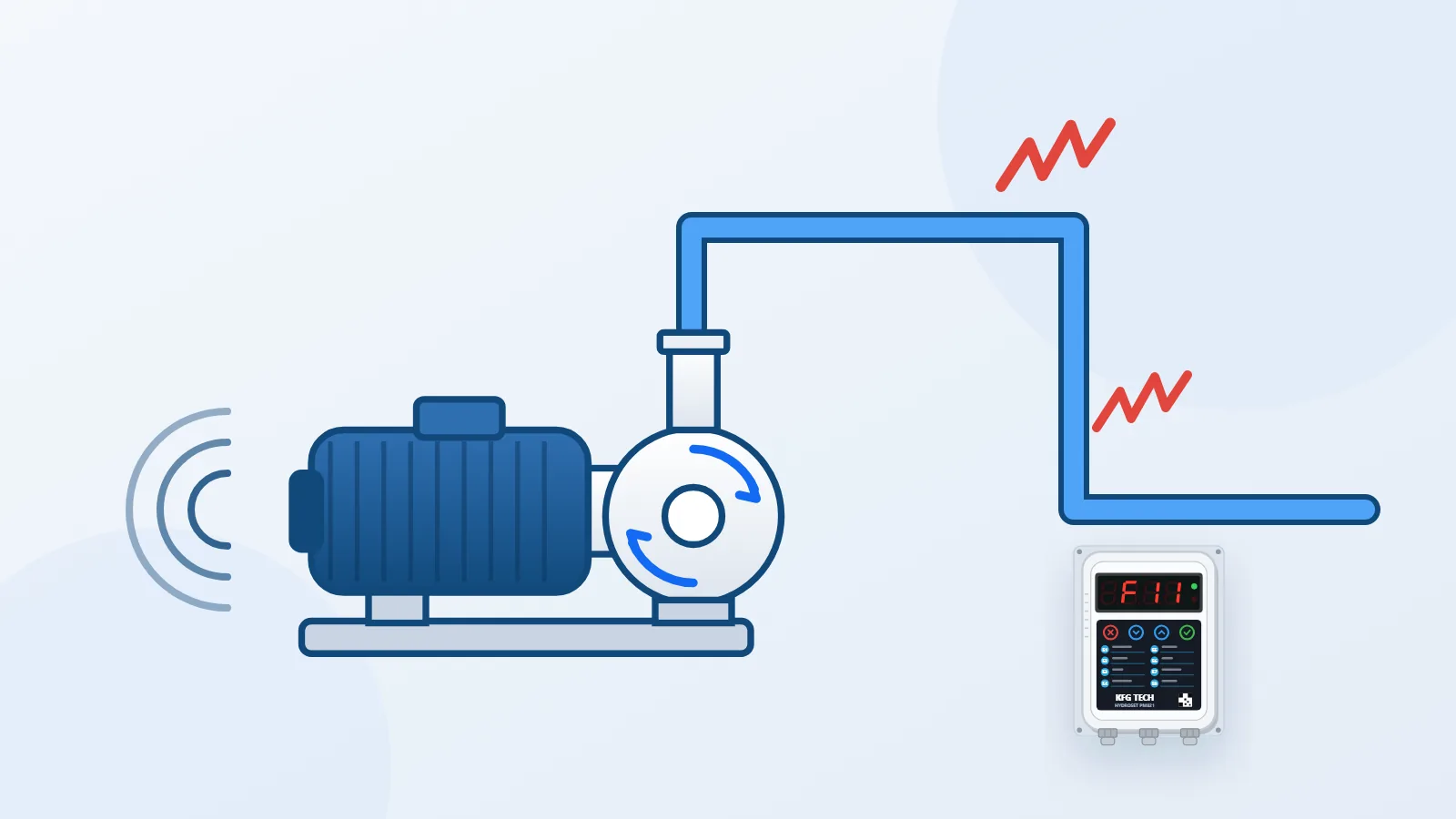
A loose terminal is one of the common causes of fault E2 (load missing) — the unit sees no current from the pump and stops it.
What 180-degree and 90-degree mean
These two phrases refer to the angle of the pressure sensor relative to the body, and they affect whether the sensor fits in the space available beside the five-way manifold. They make no difference to the electronic operation.
What the manual states about the HYDROSET PM821 sensor is:
| Specification | Value |
|---|---|
| Sensor thread | G1/4 female |
| Pressure range | 0 to 20 bar |
| Mounting position | In place of the pressure switch on the five-way manifold, after the check valve |
| Health indicator | Green light on the back of the sensor |
The sensor cable is fixed. Before tightening, turn the sensor backwards a few turns and then screw it in, so the cable does not twist.
What really matters when buying
These four phrases describe the outward form of the connection. What decides how the unit works lies elsewhere:
- The pump nameplate current — the only number that decides the model. Up to 8 A, PM821-8; from 8 to 16 A, PM821-16.
- Dry-running protection — in most cases this is the reason pumps burn out.
- A numeric pressure setting — not a screw and a spring.
- A fault code display — so that when something goes wrong, you know what it is.
The model selection table and the full specifications are in the user manual, and the wiring and start-up steps are explained in the installation guide.